
How to Improve Your Health by Changing Daily Lifestyle: 12 Science-Backed Habits (2026)
Small daily habits — sleep, walking, water, real food, less sugar and salt, and stress control — improve your health more than almost any single medicine. A practical, evidence-based guide from a registered Delhi pharmacist, with a simple daily routine you can start today.
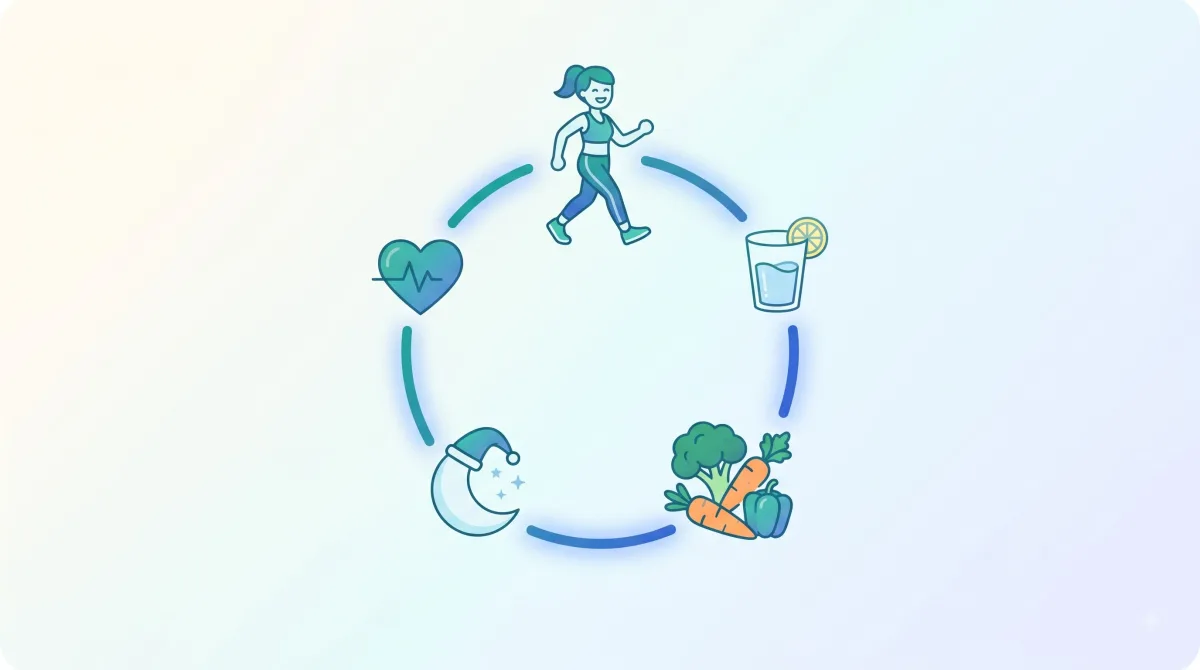
How to Improve Your Health by Changing Daily Lifestyle: 12 Science-Backed Habits (2026)
Last reviewed by Komal Sharma, Registered Pharmacist · Rajdhani Medicos · Drug License RLF21DL2025003179
Quick answer: The biggest health gains come from small, consistent daily habits — 7-8 hours of sleep, 30 minutes of walking, enough water, more vegetables and fibre, less sugar and salt, and managing stress. Done consistently, these lower your risk of diabetes, high blood pressure, and heart disease — often more powerfully than any single medicine.
Why daily habits matter more than you think
Most of India's biggest health problems — Type 2 diabetes, high blood pressure, heart disease, obesity — are strongly driven by daily lifestyle, and are largely preventable. You do not need an extreme routine. You need a few good habits repeated every day. Here are twelve that genuinely move the needle.
12 daily changes that improve your health
1. Sleep 7-8 hours
Poor sleep raises blood sugar, blood pressure, appetite, and stress hormones. Fixing sleep is often the single highest-impact change. Keep a consistent bedtime and avoid screens before bed.
2. Walk 30 minutes (aim ~8,000 steps)
A daily brisk walk improves insulin sensitivity, heart health, mood, and weight — no gym required. A walk after meals is especially good for blood sugar.
3. Drink enough water (2-3 litres)
Mild dehydration causes fatigue, headaches, and poor concentration. Keep a bottle with you; start your day with a glass of water.
4. Eat more vegetables and fibre
Fill half your plate with vegetables and choose whole grains (oats, bajra, jowar, brown rice) and legumes. Fibre steadies blood sugar and supports digestion.
5. Cut sugar and refined carbs
Sugary drinks, sweets, biscuits, and maida spike blood sugar and add empty calories. Reducing them is one of the fastest wins for weight and energy.
6. Reduce salt (under 5 g / ~1 teaspoon a day)
Too much salt raises blood pressure. Cut back on pickles, papad, namkeen, and processed foods. Learn more in our blood pressure guide.
7. Manage stress
Chronic stress raises blood pressure and blood sugar and worsens sleep. Just 5-10 minutes a day of deep breathing, yoga, prayer, or a walk helps.
8. Limit screen time and protect your eyes
Take regular breaks (the 20-20-20 rule: every 20 minutes, look 20 feet away for 20 seconds), and avoid screens late at night to protect sleep.
9. Get some sunlight
A large share of Indians are low in Vitamin D. A little daily sunlight supports bones, mood, and immunity. If you are deficient, a supplement may help — browse vitamins & supplements.
10. Limit alcohol and quit smoking
Both strongly raise the risk of heart disease, cancer, and high blood pressure. Cutting down — or quitting — pays off quickly.
11. Know your numbers (check-ups)
Get your blood pressure, blood sugar (HbA1c), and Vitamin D/B12 checked periodically. Catching a problem early is far easier than treating it late. Keep a home BP monitor or glucometer if advised — see home healthcare devices.
12. Take prescribed medicines consistently
If you take medicine for a chronic condition like diabetes or BP, taking it every day without gaps is itself a core healthy habit. Auto-refill subscriptions help you never run out. See our diabetes control guide.
A simple daily routine you can start today
- Morning: Glass of water · light stretch or short walk · a protein-rich breakfast · any morning medicines/supplements.
- Daytime: Move every hour · vegetables at lunch · water instead of soft drinks · a 10-minute post-lunch walk.
- Evening: 30-minute walk or activity · lighter dinner before 8-9 pm · screens off ~1 hour before bed.
- Night: Fixed bedtime · 7-8 hours of sleep.
You do not have to do all twelve at once. Pick two, master them for two weeks, then add more. Consistency beats intensity.
When lifestyle needs a little support
Great habits come first — but sometimes your body needs help. If a blood test shows a Vitamin D or B12 deficiency, a targeted supplement can make a real difference (see our guide to the most researched supplement). And for fever or occasional pain, choose a safe medicine used correctly. Our registered pharmacist is free on WhatsApp to help you decide.
Buy wellness essentials online in Delhi
Rajdhani Medicos delivers vitamins, supplements, home health devices, and daily-care products same-day across Delhi and NCR — with free pharmacist advice and 1% cashback on every order.
Explore wellness products → · Talk to a pharmacist free →
Frequently Asked Questions
What are the most important lifestyle changes for good health?
The highest-impact habits are getting 7-8 hours of sleep, walking about 30 minutes daily, drinking enough water, eating more vegetables and fibre, cutting sugar and salt, and managing stress. Together these lower the risk of diabetes, high blood pressure, and heart disease.
How much should I walk every day to stay healthy?
Aiming for about 30 minutes of brisk walking, or roughly 8,000 steps a day, gives strong benefits for heart health, blood sugar, weight, and mood. A short walk after meals is especially helpful.
How many hours of sleep do I need?
Most adults need 7-8 hours of good-quality sleep. Consistently sleeping less raises blood sugar, blood pressure, appetite, and stress.
How much water should I drink daily?
Around 2-3 litres a day suits most adults, though needs vary with weather and activity. A simple sign of good hydration is pale-yellow urine.
Can lifestyle changes reverse diabetes or high blood pressure?
Lifestyle changes can significantly improve blood sugar and blood pressure, and in early cases may reduce or delay the need for medicine. Never stop prescribed medicine on your own — work with your doctor as your numbers improve.
What is the best time to exercise?
The best time is whenever you will do it consistently. That said, a walk after meals is particularly good for controlling blood sugar.
Do I still need supplements if I eat healthy?
A balanced diet covers most needs, but many Indians are still low in Vitamin D and B12. It is best to test first, then supplement any confirmed deficiency rather than guessing.
I have no time — how do I start?
Start tiny: pick just two habits (for example, a 10-minute post-dinner walk and a fixed bedtime), keep them for two weeks, then add more. Small, consistent steps beat big changes you cannot sustain.
The bottom line
You do not need a perfect routine to be healthier — you need a few good habits, repeated daily. Start with sleep, a daily walk, and cutting sugary drinks, and build from there. For anything your body needs beyond food and movement, our pharmacist is here to help.
Disclaimer: This article is for general information only and is not a substitute for professional medical advice. Consult a doctor before making major changes if you have a health condition or take regular medicines.
About the reviewer: Komal Sharma is a Registered Pharmacist with the Delhi Pharmacy Council and consulting pharmacist for Rajdhani Medicos.
Rajdhani Medicos — Licensed online pharmacy serving Delhi. Drug License RLF21DL2025003179. GSTIN 07KXQPK3422R1ZJ.
About the author
Registered Pharmacist · Delhi Pharmacy Council · Consulting Pharmacist at Rajdhani Medicos